Buy proxywebsite.org ?
We are moving the project
proxywebsite.org .
Are you interested in purchasing the domain
proxywebsite.org ?
domain@kv-gmbh.de · 0541-91531010
Buy proxywebsite.org ?
What is the derivation of the variance decomposition of the variance?
The variance decomposition of the variance is derived from the decomposition of the total variance into its components. This decomposition helps to understand the relative contributions of different sources of variation to the total variance. By partitioning the variance into its constituent parts, such as the variance due to different factors or sources, we can quantify the amount of variability explained by each component. This decomposition is commonly used in statistical analysis to assess the importance of various factors in explaining the overall variability in a dataset. **
What is the asymptotic variance?
The asymptotic variance is a measure of the variability of an estimator as the sample size approaches infinity. It represents the limit of the variance of the estimator as the sample size becomes very large. In statistical theory, it is used to assess the precision and reliability of an estimator in the long run. A smaller asymptotic variance indicates that the estimator is more efficient and provides more precise estimates as the sample size increases. **


Similar search terms for Variance
Top-Angebote
Products related to Variance:
-
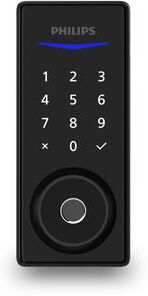
Philips Home Access Zwave Smart LockPhilips multi-family- apartment Z-Wave Plus long range certified key-less entry smart dead bolt door lock. Convenient Multiple Access methods- Z-Wave Plus Long Range compatible , touchscreen Keypad Pin-code or traditional Key.199,99 $*Shipping: 0,00 $Secure redirect to the provider
-
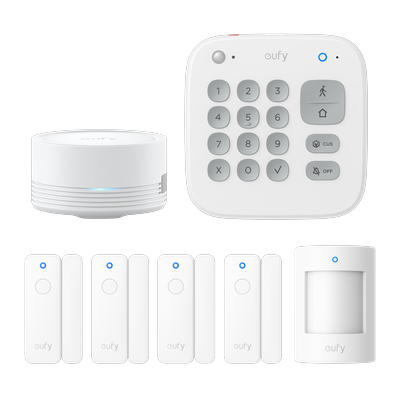
eufy Essential Security Bundle eufy Essential Security BundleYour Home's First Line of Defense: Covers key entry points—front/back doors and main entrances—with reliable detection and stronger long-range connectivity, helping keep your home protected around the clock. Proactive Protection, Instant Alerts³:...299,99 $*Shipping: 0,00 $Secure redirect to the provider


-
What is variance in mathematics?
In mathematics, variance is a measure of how much a set of numbers varies or spreads out. It is a statistical measure that indicates the extent to which data points differ from the mean (average) of the set. A high variance means that the numbers in the set are spread out over a wider range, while a low variance means that the numbers are closer to the mean. Variance is calculated by taking the average of the squared differences between each data point and the mean. **
-
What is the difference between variance and standard deviation, and why is variance needed?
Variance and standard deviation are both measures of the spread or dispersion of a set of data. The main difference between the two is that variance is the average of the squared differences from the mean, while standard deviation is the square root of the variance. Standard deviation is often preferred over variance because it is in the same units as the original data, making it easier to interpret. However, variance is still needed in statistical calculations, such as in the calculation of the standard deviation, and it provides valuable information about the variability of the data. **
-
What is variance explanation in psychology?
Variance explanation in psychology refers to the extent to which a particular variable or set of variables can account for the variability in a certain psychological phenomenon or behavior. It is a measure of how much of the variability in a particular outcome can be attributed to the variables being studied. For example, in a study on the factors influencing depression, variance explanation would indicate how much of the variability in depression scores can be explained by factors such as genetics, environment, or personality traits. Understanding the variance explanation in psychology is important for identifying the key factors that contribute to a particular psychological outcome. **
-
How do you calculate variance correctly?
Variance is calculated by finding the average of the squared differences between each data point and the mean of the data set. First, calculate the mean of the data set. Then, subtract the mean from each data point, square the result, and find the average of these squared differences. This average is the variance. The formula for variance is: variance = Σ (x - μ)² / n, where Σ represents the sum of the squared differences, x is each data point, μ is the mean, and n is the number of data points. **


How can the variance be transformed?
The variance can be transformed by applying a linear transformation to the data. This can involve multiplying each data point by a constant, adding a constant to each data point, or a combination of both. Another way to transform the variance is by applying a non-linear transformation to the data, such as taking the square root or the logarithm of the data. These transformations can help to stabilize the variance, make the data more normally distributed, or make the variance more homogeneous across different groups or levels of a factor. **
What does variance stand for in statistics?
In statistics, variance is a measure of how spread out a set of data points are from the mean. It quantifies the variability or dispersion of a dataset. A high variance indicates that the data points are spread out widely, while a low variance indicates that the data points are clustered closely around the mean. Variance is calculated by taking the average of the squared differences between each data point and the mean. **
Top-Angebote
Products related to Variance:
-
StarTech.com 14-inch 16:9 Laptop Privacy Screen, Reversible Gold Filter w/Enhanced Privacy, Computer Security Filter, Removable Screen Protector/ShielPrevent visual eavesdropping by limiting the viewing angle of your laptop screenThis Laptop Privacy Screen features a universal design compatible with 14-inch laptop screens with a 16:9 aspect ratio display. Gold Privacy Filters have a reflective surface that instantly transitions from a clear view to a mirror effect outside of the intended viewing angle, significantly improving visual privacy when working in an office or public environment.Prevent Visual EavesdroppingThe gold security filter is a convenient solution that features a quick shift to a mirror-like effect to protect confidential data from unwanted viewers while maintaining a clear view of 60 degrees (+/- 30 degrees from the center) for the user.Reversible FilterThe privacy filter's removable and reversible design allows users to effortlessly switch between a glossy gold side for maximum privacy and an anti-glare matte side for environments prone to glare. The matte side provides additional screen protection with a scratch- and fingerprint-resistant coating.Hassle-free InstallationThe universal design won't interfere with top-mounted webcams, sensors, or when closing the lid. The privacy filter can be installed in two different ways. Affix the privacy shield to bezel-less displays using the transparent and residue-free adhesive strips. Alternatively, use the slide mount tabs to install the privacy screen on displays with bezels. The latter is recommended when frequent reversal or removal is required.Blue Light ReductionReduce eye strain and improve visual comfort with this blue light-reducing privacy shield. It blocks 40% - 51% of the blue light emitted from the display in the 380nm - 480nm wavelength range. Digital eye strain can lead to symptoms like headaches, dry eyes, and blurred vision.The StarTech.com Advantage48,99 £*Shipping: 0,00 £Secure redirect to the provider
-
Microsoft Access (Windows)Microsoft Access for Windows – One-Time Purchase, Lifetime AccessMicrosoft Access is your complete database management and application-building solution — available now as a one-time purchase for Windows PCs.Create, manage, and share databases with ease using powerful built-in templates, advanced queries, and forms — perfect for businesses, educators, and advanced users who need to keep large amounts of data organized.With no subscriptions or recurring fees, you’ll enjoy full offline access to Microsoft’s proven database tools, tightly integrated with Excel, Outlook, and other Office applications.System requirements: Compatible with Windows 10 and newer operating systems. Supports both 32-bit and 64-bit architectures.Buy a Genuine Access License from a Certified Microsoft ResellerShop with confidence — PrimeLicense is a Microsoft Certified Partner, which means we’re officially authorized to sell, support, and provide services for Microsoft products. Plus, with an outstanding 4.9/5 rating on Trustpilot, Google, and Trusted Shops, you can count on us for genuine software and top-quality support.With your purchase, you’ll receive: An original lifetime license key for Office 2024 and Adobe Acrobat Clear installation and activation guides sent instantly via email Free expert support whenever you need help Please Note:This license is for the standalone Access application for Windows only.Need More Than Access? If you also need Word, Excel, PowerPoint, Outlook, or other Office apps, consider the full Office suite for Windows: Office 2024 Pro Plus Office 2021 Pro Plus Office 2019 Pro Plus Prefer a Cloud-Based Solution? Check out Microsoft 365 Personal — includes online access, real-time collaboration, automatic updates, and 1 TB of OneDrive cloud storage.Get Your Access Software in 3 Easy Steps Purchase Access from PrimeLicense — your license key and activation guide will arrive instantly via email. Download the official installation file from Microsoft using the secure link we provide. Activate with your key and start managing your databases right away. Important:Microsoft Access 2021 is designed for Windows PCs only.For Mac users who need database management solutions, we recommend using Microsoft Excel or the cloud-based Microsoft 365 app as an alternative.Secure Checkout & Buyer ProtectionYour order is protected with Trusted Shops Buyer Protection for up to €2,500. We also offer a 30-day money-back guarantee for added peace of mind.All payments are encrypted via SSL and processed securely through Stripe, Google Pay, and Apple Pay — keeping your personal information safe at every step.What You’ll Get with Microsoft AccessMicrosoft Access helps you efficiently create and manage databases with powerful tools: Database creation using templates or building from scratch with a user-friendly graphical interface Relational database support for organizing complex, linked data across multiple tables Data import and linking capabilities from Excel, SQL Server,...25,90 £*Shipping: 0,00 £Secure redirect to the provider
-
What is the derivation of the variance decomposition of the variance?
The variance decomposition of the variance is derived from the decomposition of the total variance into its components. This decomposition helps to understand the relative contributions of different sources of variation to the total variance. By partitioning the variance into its constituent parts, such as the variance due to different factors or sources, we can quantify the amount of variability explained by each component. This decomposition is commonly used in statistical analysis to assess the importance of various factors in explaining the overall variability in a dataset. **
-
What is the asymptotic variance?
The asymptotic variance is a measure of the variability of an estimator as the sample size approaches infinity. It represents the limit of the variance of the estimator as the sample size becomes very large. In statistical theory, it is used to assess the precision and reliability of an estimator in the long run. A smaller asymptotic variance indicates that the estimator is more efficient and provides more precise estimates as the sample size increases. **
-
What is variance in mathematics?
In mathematics, variance is a measure of how much a set of numbers varies or spreads out. It is a statistical measure that indicates the extent to which data points differ from the mean (average) of the set. A high variance means that the numbers in the set are spread out over a wider range, while a low variance means that the numbers are closer to the mean. Variance is calculated by taking the average of the squared differences between each data point and the mean. **
-
What is the difference between variance and standard deviation, and why is variance needed?
Variance and standard deviation are both measures of the spread or dispersion of a set of data. The main difference between the two is that variance is the average of the squared differences from the mean, while standard deviation is the square root of the variance. Standard deviation is often preferred over variance because it is in the same units as the original data, making it easier to interpret. However, variance is still needed in statistical calculations, such as in the calculation of the standard deviation, and it provides valuable information about the variability of the data. **
Similar search terms for Variance
-
Philips Home Access Zwave Smart LockPhilips multi-family- apartment Z-Wave Plus long range certified key-less entry smart dead bolt door lock. Convenient Multiple Access methods- Z-Wave Plus Long Range compatible , touchscreen Keypad Pin-code or traditional Key.199,99 $*Shipping: 0,00 $Secure redirect to the provider
-
eufy Essential Security Bundle eufy Essential Security BundleYour Home's First Line of Defense: Covers key entry points—front/back doors and main entrances—with reliable detection and stronger long-range connectivity, helping keep your home protected around the clock. Proactive Protection, Instant Alerts³:...299,99 $*Shipping: 0,00 $Secure redirect to the provider
-
Inspired Living Waterproof Dog Car Seat Cover With Armrest Access Waterproof Dog Car Seat Cover With Armrest AccessEnjoy cleaner, calmer car rides with a cover made for pets who love the journey as much as the destination. This dog car seat cover protects your back seat from fur, mud, scratches, drool, and everyday mess. Designed as a soft pet travel mattress,...36,97 $*Shipping: 0,00 $Secure redirect to the provider
-
What is variance explanation in psychology?
Variance explanation in psychology refers to the extent to which a particular variable or set of variables can account for the variability in a certain psychological phenomenon or behavior. It is a measure of how much of the variability in a particular outcome can be attributed to the variables being studied. For example, in a study on the factors influencing depression, variance explanation would indicate how much of the variability in depression scores can be explained by factors such as genetics, environment, or personality traits. Understanding the variance explanation in psychology is important for identifying the key factors that contribute to a particular psychological outcome. **
-
How do you calculate variance correctly?
Variance is calculated by finding the average of the squared differences between each data point and the mean of the data set. First, calculate the mean of the data set. Then, subtract the mean from each data point, square the result, and find the average of these squared differences. This average is the variance. The formula for variance is: variance = Σ (x - μ)² / n, where Σ represents the sum of the squared differences, x is each data point, μ is the mean, and n is the number of data points. **
-
How can the variance be transformed?
The variance can be transformed by applying a linear transformation to the data. This can involve multiplying each data point by a constant, adding a constant to each data point, or a combination of both. Another way to transform the variance is by applying a non-linear transformation to the data, such as taking the square root or the logarithm of the data. These transformations can help to stabilize the variance, make the data more normally distributed, or make the variance more homogeneous across different groups or levels of a factor. **
-
What does variance stand for in statistics?
In statistics, variance is a measure of how spread out a set of data points are from the mean. It quantifies the variability or dispersion of a dataset. A high variance indicates that the data points are spread out widely, while a low variance indicates that the data points are clustered closely around the mean. Variance is calculated by taking the average of the squared differences between each data point and the mean. **
* All prices are inclusive of VAT and, if applicable, plus shipping costs. The offer information is based on the details provided by the respective shop and is updated through automated processes. Real-time updates do not occur, so deviations can occur in individual cases. ** Note: Parts of this content were created by AI.